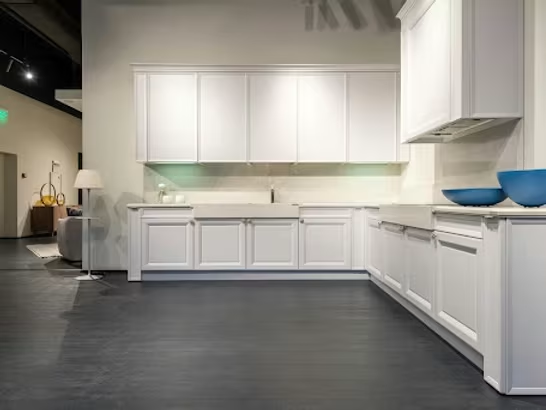
Welcome to the world of vinyl flooring! It’s an increasingly popular choice for homes and commercial spaces across Singapore, thanks to its blend of aesthetic appeal, durability, and cost-effectiveness. Yet, despite its widespread adoption, many misconceptions about vinyl flooring persist. From installation complexities to maintenance requirements and overall performance, these myths can often deter potential users from considering a truly versatile and high-performance material. Understanding the truth behind these common beliefs is crucial for making informed decisions about your flooring needs.
5 Myths About Vinyl Flooring: Installation, Maintenance & More
Vinyl flooring has evolved significantly, offering remarkable durability, water resistance, and design flexibility. Common misconceptions often revolve around its longevity, ease of installation, and how challenging it is to maintain. Modern vinyl, especially Luxury Vinyl Planks (LVP) and Luxury Vinyl Tiles (LVT), is engineered for high performance, making it suitable for both high-traffic residential areas and demanding commercial environments. It provides excellent value, combining the look of natural materials like wood or stone with superior practical benefits. Discovering the reality behind these myths can help you choose the ideal flooring solution for your space.
Myth 1: Vinyl Flooring Looks Cheap and Unnatural
Many homeowners question, ‘Does modern vinyl flooring actually look good?’ The perception of vinyl as a flimsy, artificial-looking material from decades past is outdated. Today’s vinyl flooring, particularly high-quality Luxury Vinyl Planks (LVP) and Luxury Vinyl Tiles (LVT), uses advanced photographic and embossing technologies to mimic natural materials with stunning accuracy. These planks and tiles feature incredibly realistic wood grains, stone textures, and even abstract designs.
Flooring specialists often note that advancements in digital printing allow for high-definition replication of natural wood species like oak, walnut, and teak, complete with varied plank patterns to avoid repetition. Textures are also embossed onto the surface, providing a tactile feel that truly resembles real wood or stone. This attention to detail means vinyl can seamlessly integrate into various interior design themes, from minimalist to rustic, adding elegance without the high cost or maintenance of natural materials. Explore our diverse range of vinyl flooring options to see the quality for yourself.
Myth 2: Vinyl Flooring is Not Durable and Scratches Easily
A frequent concern is, ‘Is vinyl flooring scratch resistant?’ It is a common misconception that vinyl flooring is prone to scratches and wear, making it unsuitable for high-traffic areas. Modern vinyl flooring, especially products designed for residential and commercial use, is engineered for exceptional durability. It typically features multiple layers, including a robust wear layer that provides significant protection against scratches, scuffs, dents, and stains.
The wear layer, often made from clear PVC, is a critical component influencing the flooring’s longevity. Thicker wear layers, measured in mils (e.g., 20 mil for residential, 28 mil or more for commercial), offer superior resistance. Many premium vinyl floors also incorporate additional protective coatings, such as UV-cured urethane or ceramic bead finishes, further enhancing their resilience. These advancements ensure vinyl can withstand the rigors of busy households with pets and children, or commercial spaces with heavy foot traffic, maintaining its pristine appearance for years. This makes it a popular choice for commercial projects.
Myth 3: Vinyl Flooring Installation is Always Complex and Time-Consuming
People often ask, ‘Is installing vinyl flooring difficult?’ While any flooring installation benefits from professional expertise, the idea that vinyl flooring is exceptionally complex or time-consuming to install is largely a myth. In fact, many modern vinyl flooring systems are designed for relatively straightforward installation, especially compared to traditional materials like hardwood or tile.
There are several installation methods, each with varying degrees of complexity:
| Installation Method | Description | Complexity |
|---|---|---|
| Click-Lock/Floating | Planks/tiles interlock without adhesive, forming a floating floor. | Low to Medium (DIY-friendly for some) |
| Glue-Down | Requires adhesive to bond the vinyl directly to the subfloor. | Medium (Professional recommended for best results) |
| Loose Lay | Heavier planks/tiles rely on their weight and friction for stability; often used for temporary installations. | Low (Easiest, suitable for specific applications) |
For optimal results, particularly in larger areas or commercial settings, professional installation is always recommended. They ensure proper subfloor preparation, precise cuts, and correct sealing, which are vital for longevity and performance. Many homeowners are surprised to learn how quickly a professional team can transform their space with vinyl flooring, minimizing disruption. For detailed information on our installation services, visit our installation page.
Myth 4: Vinyl Flooring Requires High Maintenance and Special Cleaning Products
A common question is, ‘How do you clean vinyl flooring effectively?’ The belief that vinyl flooring is difficult to maintain or requires expensive, specialized cleaning products is incorrect. In reality, vinyl is one of the easiest flooring options to care for, making it ideal for busy families and commercial environments where quick cleanups are essential.
Maintenance is straightforward:
- Regular Sweeping or Vacuuming: Daily or weekly sweeping or vacuuming (with a hard floor attachment) removes loose dirt and grit, preventing surface scratches.
- Damp Mopping: For deeper cleaning, a damp mop with a pH-neutral cleaner is usually sufficient. Avoid excessive water, as standing water can sometimes seep into seams over time, though modern vinyl is highly water-resistant.
- Avoid Harsh Chemicals: Do not use abrasive cleaners, wax-based products, or steam cleaners, as these can damage the wear layer or leave a residue.
The non-porous surface of vinyl resists spills and stains, making spills easy to wipe away. This low-maintenance aspect significantly contributes to vinyl’s popularity in Singaporean homes and commercial spaces. Compared to wood decking which might require periodic oiling or sealing, vinyl offers a fuss-free solution.
Myth 5: Vinyl Flooring is Not Waterproof
The myth ‘Is vinyl flooring truly waterproof?’ continues to circulate, often confusing it with laminate or earlier vinyl products. Modern luxury vinyl flooring (LVP/LVT) is, in fact, highly water-resistant, and many products are designed to be completely waterproof. This makes it an excellent choice for moisture-prone areas like kitchens, bathrooms, laundry rooms, and basements.
The core of waterproof vinyl planks and tiles is typically made from a Stone Plastic Composite (SPC) or Wood Plastic Composite (WPC), both of which are impervious to water. Unlike wood or laminate, which can swell, warp, or buckle when exposed to moisture, waterproof vinyl remains stable. This inherent resistance to water damage protects against spills, humidity, and even minor floods, preventing mold and mildew growth beneath the flooring. For homeowners in Singapore’s humid climate, this feature is a significant advantage, ensuring peace of mind and long-lasting performance. For further inquiries or to discuss your specific needs, feel free to contact us.
Understanding the facts about vinyl flooring reveals it as a robust, aesthetically versatile, and highly practical option for a wide range of applications. It addresses many of the concerns homeowners and commercial decision-makers often have, providing a reliable and beautiful solution.