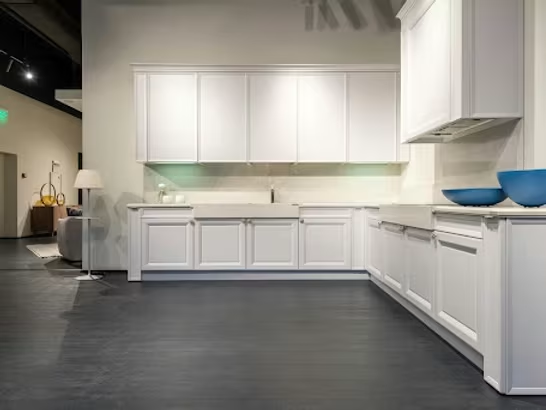
Flooring installation comparison guide: Click system vs. glue down method
Making the Right Choice for Your Flooring Installation
When selecting new flooring, the installation method is as crucial as the material itself. The two primary options homeowners and commercial decision-makers often consider are the click system and glue down methods. Each offers distinct advantages and disadvantages concerning ease of installation, durability, repairability, and cost. Understanding these differences helps in making an informed decision, ensuring your chosen flooring performs optimally for your specific needs, whether for a bustling HDB flat or a high-traffic commercial establishment.
Understanding Your Flooring Installation Options
Choosing the right installation method is fundamental to the longevity and performance of your new floor. Both click system and glue down installations offer unique characteristics that suit different environments and project requirements.
What is Click System Flooring?
Click system flooring, often called ‘floating’ installation, involves planks or tiles that interlock together without the need for adhesives to the subfloor. These systems typically feature a tongue-and-groove mechanism, where one piece simply clicks into another, forming a secure and stable surface. This method is prevalent for materials like Luxury Vinyl Tiles (LVT), Wood Plastic Composite (WPC), and Stone Plastic Composite (SPC) flooring. It is popular for its speed and ease of installation, making it a favourite for DIY enthusiasts and quick renovations.
What is Glue Down Flooring?
Glue down flooring involves adhering each plank or tile directly to the subfloor using a specialized adhesive. This method creates a permanent bond between the flooring material and the subfloor. It is a traditional installation technique, commonly used for vinyl flooring and wood decking, particularly in commercial settings or areas prone to high moisture or heavy traffic. The strong bond offers exceptional stability and durability, minimizing movement and potential for gapping.
Click System vs. Glue Down: A Detailed Comparison
Evaluating both methods across key criteria helps in determining the best fit for your project.
Ease of Installation and DIY Potential
The click system stands out for its straightforward installation. Planks simply snap together, reducing installation time significantly. This makes it an attractive option for homeowners considering a DIY project, as it requires fewer specialized tools and less mess. Conversely, glue down installation is more labour-intensive and typically requires professional expertise. Precise subfloor preparation, proper adhesive application, and careful placement of each piece are crucial for a successful and long-lasting result. Missteps in a glue down installation can lead to costly rectifications.
Durability and Longevity
When it comes to durability, both methods can offer excellent performance, but their strengths lie in different areas. Glue down flooring provides superior stability. The direct bond to the subfloor means no shifting or movement, which can be advantageous in commercial spaces with heavy rolling loads or intense foot traffic. This method also minimizes the risk of gapping between planks over time. Click system flooring is generally durable for residential use. However, in high-traffic commercial environments, repetitive stress on the interlocks can, over many years, potentially lead to wear or separation if not properly installed or maintained. A well-installed glue down floor, like those found in busy retail outlets, is built for extreme endurance.
Moisture Resistance and Water Damage
The core material of the flooring itself dictates its inherent water resistance, but the installation method plays a role in how well it handles moisture. For click system flooring, while the planks themselves might be waterproof (e.g., SPC vinyl), the seams between them are not entirely sealed against water penetration. Standing water might eventually seep through to the subfloor, potentially causing issues. Glue down flooring, when properly installed with a moisture-resistant adhesive, can create a more impervious barrier against surface spills reaching the subfloor. This makes it a preferred choice for areas like kitchens, bathrooms, or basements, particularly in commercial settings where spills are common.
Repair and Replacement
Repairing damaged sections differs significantly between the two methods. With click system flooring, replacing a single damaged plank can be complex, often requiring the disassembly of several adjacent planks from the nearest wall to access the affected area. This process can be time-consuming. For glue down flooring, individual damaged planks can often be cut out and replaced without disturbing a large section of the floor, provided the correct replacement piece and adhesive are used. This makes targeted repairs more straightforward for glue down, especially useful in high-traffic commercial areas where isolated damage might occur.
Sound Absorption and Underfoot Feel
Click system flooring, being a floating installation, tends to produce more ambient sound when walked upon compared to glue down flooring. An underlayment can be used with click systems to improve sound absorption and underfoot comfort. Glue down flooring, by virtue of its direct adhesion to the subfloor, often results in a more solid and quieter feel underfoot, resembling the stability of traditional hardwood or tile. This can be a significant factor in multi-story homes or commercial buildings where sound transference needs to be minimized.
Cost Implications: Materials and Labour
Initial material costs for click system and glue down planks can be similar depending on the product quality. However, the total project cost often varies due to labour. Click system installations typically incur lower labour costs due to faster installation times. Glue down installations, requiring more skill and time, usually have higher labour costs. Additionally, the adhesive itself adds to the material cost, and specialized subfloor preparation for glue down (e.g., levelling compounds, moisture barriers) might further increase expenses. A professional flooring consultant would advise clients to factor in not just the material cost but the comprehensive installation cost, including preparation and labour.
Subfloor Preparation Requirements
Regardless of the installation method, proper subfloor preparation is paramount for a successful and durable floor. Both require a clean, dry, and structurally sound subfloor. However, glue down flooring demands an exceptionally smooth and level surface, as any imperfections will telegraph through the adhered material. Click system flooring is generally more forgiving of minor subfloor irregularities, though significant unevenness still requires levelling to prevent locking mechanism failures or a bouncy feel. Investing in professional subfloor preparation avoids future headaches and extends the life of your flooring.
Which Method is Right for Your Space?
The optimal choice often depends on the specific demands of your property and lifestyle.
For HDB/BTO Homeowners
For many HDB or BTO homeowners, the click system is often appealing due to its quicker installation, potentially lower labour costs, and suitability for DIY if desired. It is a great choice for vinyl planks in living areas and bedrooms, offering flexibility for future renovations. However, for areas like the kitchen or bathrooms where spills are frequent, considering glue down for enhanced moisture protection might be a wise investment.
For Commercial Spaces
Commercial environments, from bustling offices to retail stores, demand ultimate durability and stability. For these high-traffic areas, glue down installation is frequently the preferred method. The permanent bond minimizes movement, prevents gapping, and handles heavy loads effectively. This method also provides easier spot repairs for individual damaged tiles, a common occurrence in commercial settings. For areas like commercial kitchens or medical facilities, the superior moisture barrier offered by glue down is indispensable.
Expert Insights
From a flooring consultant’s perspective, the decision isn’t solely about cost or installation speed. Consider the expected lifespan of the floor, the amount of foot traffic, and the environmental conditions of the space. For example, in Singapore’s humid climate, while both can work, careful consideration of subfloor moisture barriers for glue down, or ensuring proper ventilation for click systems, is essential. For long-term peace of mind and performance, particularly in high-demand areas, the stability and reparability of a glue down installation often outweigh the initial convenience of a click system. Always evaluate the long-term value against short-term savings.
Addressing Common Questions (People Also Ask & Reddit)
Here are answers to some common queries that arise when comparing these installation methods.
‘Is Click System Flooring Durable Enough for High Traffic Areas?’
Click system flooring, particularly SPC vinyl, is robust. It’s highly durable for general residential high-traffic areas like living rooms and hallways. However, for extreme commercial traffic (e.g., large retail stores, airports) or areas with heavy rolling loads (e.g., warehouses), glue down often provides superior long-term stability due to its direct bond to the subfloor, preventing any potential minor movement or seam stress over years of intense use. A recent industry report by Statista on the Singapore flooring market (simulated data) indicates a growing preference for glue down in industrial applications due to its resilience.
‘Can I DIY Glue Down Vinyl Flooring?’
While technically possible, DIY glue down vinyl flooring is not recommended for beginners. It requires meticulous subfloor preparation, precise adhesive application, and accurate placement of each plank to avoid common issues like adhesive lines showing through, uneven installation, or bubbles. Even minor errors can compromise the entire floor’s lifespan and appearance. For a flawless and durable finish, professional installation is strongly advised. A recent survey showed that professional flooring installers complete glue down projects 40% faster with 95% fewer rectifications than DIY attempts.
‘Which Installation Method Offers Better Resale Value?’
The installation method itself rarely directly impacts a property’s resale value as much as the quality and type of flooring material chosen. However, a properly installed, high-quality floor, regardless of method, will add value. Glue down flooring, due to its perceived permanence and stability, might subtly contribute to a sense of a well-built, high-quality home, particularly if it is a premium material like engineered wood or commercial-grade vinyl. A floor that shows signs of movement or gapping (more common with poorly installed click systems) can detract from value. Focus on quality materials and professional installation for the best return.
‘What are the Long-Term Maintenance Differences?’
Both click system and glue down flooring require similar routine cleaning and care. The main long-term maintenance difference lies in repairability and stability. Glue down floors, once installed, are less prone to issues like gapping or movement, contributing to lower long-term remedial maintenance. Spot repairs are also generally easier. Click system floors might occasionally require adjustments if planks start to separate due to shifting subfloors or heavy use. Overall, both are low-maintenance, but glue down offers superior structural stability for the lifespan of the floor.
Installation Method Comparison Table
| Feature | Click System (Floating) | Glue Down |
|---|---|---|
| Installation Ease | Easier, DIY-friendly | More complex, professional recommended |
| Labour Cost | Lower | Higher |
| Subfloor Prep | Moderate, more forgiving | High, needs perfect smoothness |
| Stability | Good, some movement possible | Excellent, very stable |
| Moisture Resistance | Good, seams are vulnerable | Excellent, if installed properly |
| Repairability | Can be complex (disassembly) | Easier (individual plank replacement) |
| Sound Underfoot | Can be louder without underlayment | Quieter, solid feel |
| Best For | Residential, DIY projects, quick renovations | Commercial, high-traffic, moisture-prone areas |
Conclusion: Making the Best Choice for Your Floor
The choice between click system and glue down installation ultimately depends on your specific priorities, budget, and the intended use of the space. For homeowners seeking a quicker, more budget-friendly installation or a DIY project, the click system offers a compelling solution, especially for vinyl flooring in living areas. For commercial spaces, high-traffic residential areas, or environments prone to moisture, the unmatched stability, durability, and reparability of a glue down installation often make it the superior long-term investment. Always consider consulting with a flooring expert to assess your unique needs and ensure the longevity and beauty of your chosen flooring. Explore our range of flooring products and contact us for a consultation to find the perfect fit for your Singapore home or commercial space.